Achieving a pristine car interior with a car vacuum involves a five-step process: decluttering, vacuuming floor mats, deep cleaning seats and upholstery, addressing crevices, and finally, vacuuming the main carpets and trunk. This method ensures a thorough clean, transforming your car’s interior from cluttered to showroom-fresh without needing professional detailing services.
You don’t need to be a professional detailer to get professional results. All you need is the right tool and a bit of know-how. So, buckle up, and let’s get that car looking showroom-fresh again.
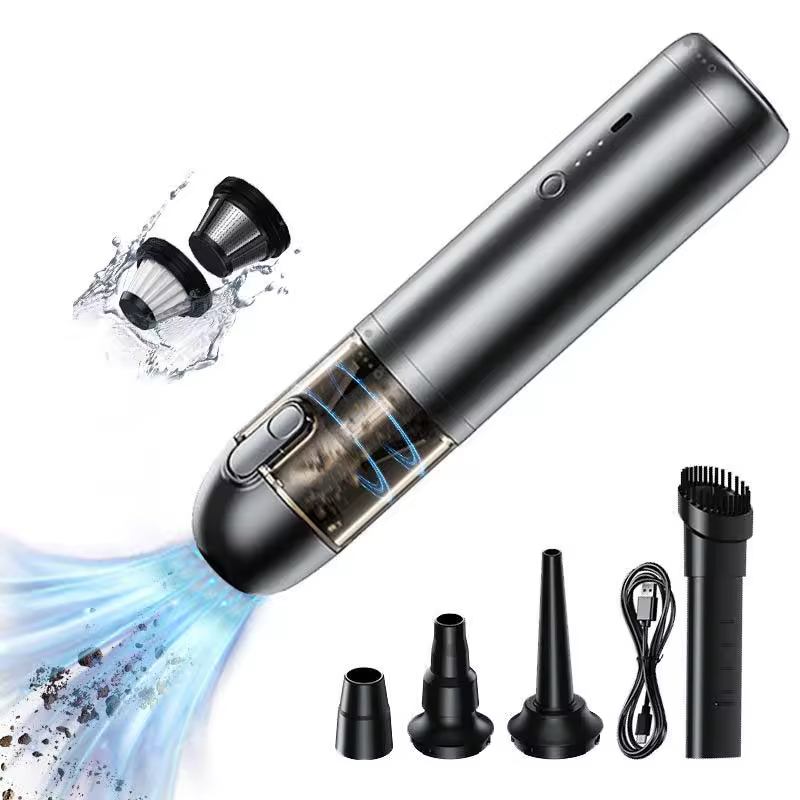 For shop curated car vacuum on this site.
Why Bother With a Dedicated Car Vacuum?
You might be thinking, “Can’t I just lug my household vacuum out to the driveway?” While you technically can, it’s a bit like trying to eat soup with a fork. It’s clunky, inefficient, and you’ll miss a lot. Dedicated car vacuums are game-changers for a few key reasons.
They are designed specifically for the tight, awkward spaces inside a vehicle. Think about the gaps beside your seats, the air vents, and the tight corners of the trunk. A standard vacuum wand is often too bulky. Car vacuums come with specialized attachments, are more portable, and are built to handle the specific types of debris—from fine dust to gritty sand—found in cars. Investing in one makes the entire process faster and far more effective.
What Are My Options? A Look at Car Vacuum Types
Before you start your car cleaning journey, it’s crucial to pick the right partner for the job. Car vacuums generally fall into three main categories, each with its own set of pros and cons.
The Reliable Workhorse: Corded Vacuums
These models plug directly into your car’s 12V cigarette lighter. Their biggest advantage is unlimited runtime. You never have to worry about a battery dying halfway through the job. They also tend to offer consistent, powerful suction. The downside? You’re tethered by a cord, which can sometimes be a hassle to maneuver around the car.
The Freedom Fighter: Cordless Car Vacuums
The most popular choice for a reason. Cordless car vacuums offer ultimate portability and convenience. Powered by rechargeable lithium-ion batteries, you can take them anywhere without being restricted by a cord. I once had to clean up a massive spill of dog kibble in a parking lot, and my cordless vacuum was an absolute lifesaver. The trade-off is battery life, which can range from 15 to 40 minutes. Look for models with fast charging and a decent runtime for the best experience.
The All-Rounder: Wet/Dry Vacuums
|
Our Picks for the Best Car Vacuum Cleaner in 2026
As an Amazon Associate, we earn from qualifying purchases.
|
||
| Num | Product | Action |
|---|---|---|
| 1 | Minthouz Handheld Vacuum Cordless, Strong Suction Car Vacuum Cleaner with LED Light, Long Runtime Hand Vacuum Cordless Rechargeable, Hand Held Vac with Charging Base for Home/Car/Pet/Office |

|
| 2 | BLACK+DECKER dustbuster Handheld Vacuum, Cordless Car Vacuum Portable 12V, with Rotating and Extendable Nozzle (HHVI320JR02) |
|
| 3 | BLACK+DECKER dustbuster AdvancedClean Cordless Handheld Vacuum, Compact Home and Car Vacuum with Crevice Tool (CHV1410L) |
|
| 4 | BISSELL Little Green Mini Portable Carpet and Upholstery Deep Cleaner, Car/Auto Detailer, with HydroRinse Self-Cleaning Tool and 4\" Tough Stain Tool, Tea Green, 4075 |
|
| 5 | BLACK+DECKER dustbuster QuickClean Cordless Handheld Vacuum, Car Vacuum Portable (HNVC215B10) |
|
| 6 | BISSELL Little Green Mini Portable Carpet and Upholstery Deep Cleaner, Car/Auto Detailer, with HydroRinse Self-Cleaning Tool and 4\" Tough Stain Tool, Tea Green, 4075 |
|
| 7 | KMM Handheld Car Vacuum Cleaner, 9000Pa Vacuum Cleaner and Air Duster, 120W High Power Hand Held Vacuum with LED Light and Multi-Nozzles for Car, Home, Office, Pet |
|
| 8 | Car Vacuum Portable Cordless, 18000Pa 2 in 1 Vacuum Cleaner&Air Duster, 130W Brushless Motor Handheld Vacuum Cordless with 7800mAh Battery, LED Light, Multi-Nozzles for Car, Home, Office, Pet |
|
| 9 | Gtech Multi MK2 K9 Cordless Handheld Vacuum Cleaner - Portable Vacuum Cleaner for Car, Home, and More - Reinforced with Lightweight Aluminum - Rechargeable - Pet Vacuum |
|
| 10 | Fanttik Slim V8 APEX Car Vacuum, 4-in-1 Portable Mini Cordless Vacuum with 19000pa Suction Power, Type-C Charge, 2 Suction Modes, Handheld Vacuum for Small Jobs, Car, Office Desk, Keyboards (Black) |
|
As the name suggests, these powerful vacuums can tackle both dry debris and liquid spills. If you have kids or pets, or you’re just prone to spilling your morning latte, a wet/dry model can be a fantastic investment. They offer incredible versatility for any mess life throws at your car’s interior.
How Do I Choose the Best Car Vacuum?
Choosing the right vacuum comes down to understanding a few key features that directly impact performance. It’s not just about looks; it’s about finding a tool that matches your specific cleaning needs, whether you’re dealing with pet hair, beach sand, or just everyday dust.
Here are the critical features to consider:
- Suction Power: This is the heart of any vacuum. It’s often measured in Pascals (Pa) or Air Watts (AW). For a car vacuum, look for something with at least 5,000 Pa or 80 AW to effectively pick up dirt and debris from carpets and upholstery. Don’t be fooled by motor wattage alone; suction power is the number that truly matters.
- Battery Life & Charging (for cordless models): Aim for a model with at least 20-30 minutes of runtime. This is usually enough for a thorough clean of a standard-sized car. Also, check the charging time—you don’t want a vacuum that needs to charge for 8 hours for 20 minutes of use.
- Attachments & Accessories: This is where a good car vacuum really shines. Essential attachments include a crevice tool for tight spaces, a brush tool for upholstery and stubborn dirt, and an extension hose for reaching under seats.
- Filtration System: A good filter traps dust and allergens, preventing them from being blown back into your car’s air. A HEPA filter is the gold standard, capturing over 99.9% of fine particles. This is a must-have for allergy sufferers.
- Dustbin Capacity: A larger dustbin means you can clean for longer without stopping to empty it. For a car vacuum, a capacity of around 0.5 liters is a good starting point.
“Don’t just look at the suction power on the box. The right attachments are what truly make the difference between a decent clean and a professional-level detail. A good crevice tool is non-negotiable.” – Maria Rodriguez, Professional Detailer, 10 years of experience.
The Main Event: Step by Step Car Detailing with a Car Vacuum
Alright, you’ve got your machine readyLet’s dive into the process. Following these steps will ensure you get a deep, satisfying clean every time.
- The Prep Work: Declutter Everything.Before the vacuum even comes out, remove all trash, loose change, floor mats, and personal items. This gives you a clear, unobstructed space to work in. It’s a simple step, but it’s the foundation of a good clean.
- The First Pass: Tackle the Floor Mats.Take the floor mats out of the car. Give them a good shake or beat them against a wall to dislodge the bulk of the dirt. Then, lay them on a clean surface and vacuum them thoroughly. Using a stiff brush attachment here works wonders on embedded dirt.
- The Deep Dive: Seats and Upholstery.Start from the top and work your way down. Use the brush attachment to vacuum the seats, headrests, and any fabric-covered areas. This attachment helps agitate the fibers to lift out dust and pet hair. For leather seats, a soft brush tool is ideal to avoid scratching. to slide the seats all the way forward and back to vacuum the tracks and the carpet underneath.
- The Nitty-Gritty: Crevices, Pockets, and Vents.This is where your crevice tool becomes your best friend. Use it to get deep into the seams of the seats, around the center console, in the door pockets, and between the seats. For air vents and other intricate areas, you can use the brush tool to dislodge dust first, then follow up with the crevice tool to suck it all up.
- The Grand Finale: Carpets and Trunk.Now it’s time for the main carpet. Again, work from front to back. Take your time and make several passes over the same area from different directions to ensure you get everything. the trunk! It’s often a neglected area that collects a surprising amount of dirt.
What About Those Awkward Spots? Pro Tips
Even with the best step by step car detailing with a car vacuum plan, some spots can be tricky. Here are a few insider tips:
- Compressed Air: For dusty air vents or tight electronic areas where a vacuum can’t reach, a can of compressed air can blast the debris out into the open where you can easily vacuum it up.
- Stiff Brush Method: For stubborn dirt ground into the carpet, use a separate stiff-bristled brush to manually agitate the area before vacuuming. This breaks the dirt free, making it easy for the vacuum to pick up.
- The “Seat Sandwich”: The gap between the front seats and the center console is notorious for collecting crumbs and coins. Use your crevice tool and push it down as far as it can go.
How Can I Keep My Car Vacuum in Top Shape?
To ensure your vacuum is always ready for action, a little maintenance goes a long way. Proper care maintains suction power and extends the life of your device, protecting your investment.
Follow these simple steps after every couple of uses:
- Empty the Dustbin: Don’t let it get completely full. An overfilled bin can significantly reduce suction power.
- Clean the Filter: Most car vacuum filters are washable. Rinse it under cool water and let it air dry completely (at least 24 hours) before putting it back in. A clogged filter is the number one cause of poor performance.
- Check for Clogs: Periodically check the attachments and the vacuum’s nozzle for any blockages that might be hindering airflow.
Frequently Asked Questions
Q: Can I use my regular home vacuum for my car?
A: You can, but it’s not ideal. Home vacuums are bulky, their attachments are often too large for a car’s tight spaces, and a corded model can be a pain to drag outside. A dedicated, portable car vacuum makes the job significantly easier and more effective.
Q: How much suction power is enough for a car vacuum?
A: For most users, a vacuum with 5,000 to 8,000 Pa is sufficient for everyday cleaning. If you have pets or frequently deal with heavy-duty messes like sand or gravel, consider a model with 10,000 Pa or more for better results.
Q: Are cordless car vacuums powerful enough?
A: Absolutely. Modern cordless vacuums with high-quality lithium-ion batteries and brushless motors can offer suction power that rivals some corded models. They are more than capable of handling the demands of car interior cleaning.
Q: How often should I perform a step by step car detailing with a car vacuum?
A: For a daily driver, a quick vacuum once a week and a more thorough deep clean once a month is a great schedule. Of course, adjust this based on your usage, whether you have kids or pets, and the environment you live in.
Q: What’s the best way to clean up pet hair from car upholstery?
A: Use a rubber brush attachment or a specialized pet hair tool on your vacuum. The rubber creates friction that helps lift stubborn, woven-in hair from fabric. For a quick fix, a rubber glove or a squeegee can also work wonders to bunch up the hair before vacuuming.
Your Car Deserves a Clean Slate
Investing in a quality car vacuum and mastering a simple cleaning routine is one of the best things you can do for your vehicle and your peace of mind. A clean interior not only looks and feels great but also helps maintain your car’s value. By following this step by step car detailing with a car vacuum guide, you’re equipped with the knowledge to tackle any mess and keep your ride looking its absolute best.
Now we’d love to hear from you! What’s your biggest car cleaning challenge? Share your own tips or ask any questions in the comments below.
Frequently Asked Questions
Can a regular home vacuum be used for car cleaning?
While technically possible, using a regular home vacuum for car cleaning is not ideal. Home vacuums are often bulky, their attachments are too large for tight car spaces, and corded models can be inconvenient to maneuver outside. A dedicated, portable car vacuum is significantly more effective and easier to use.
What is the recommended suction power for a car vacuum?
For most everyday car cleaning tasks, a car vacuum with 5,000 to 8,000 Pascals (Pa) of suction power is sufficient. If you frequently deal with heavy-duty messes like pet hair, sand, or gravel, consider a model offering 10,000 Pa or more for superior results.
Are cordless car vacuums powerful enough for deep cleaning?
Yes, modern cordless car vacuums are powerful enough for deep cleaning. Equipped with high-quality lithium-ion batteries and efficient brushless motors, they can deliver suction power comparable to some corded models, making them fully capable of handling demanding car interior cleaning tasks.
How often should I detail my car with a vacuum?
For a daily-driven vehicle, a quick vacuum once a week is recommended, with a more thorough deep clean performed once a month. This schedule can be adjusted based on factors like vehicle usage, the presence of pets or children, and your local environment.
What is the best method for removing pet hair from car upholstery?
The most effective method for removing pet hair from car upholstery is using a rubber brush attachment or a specialized pet hair tool with your vacuum. The rubber material creates friction, which helps to lift stubborn, embedded hair from fabric fibers. For quick touch-ups, a rubber glove or a squeegee can also gather hair effectively before vacuuming.
Step by Step Car Detailing with a Car Vacuum
Follow these five steps to thoroughly clean your car's interior using a car vacuum, ensuring a deep and satisfying result every time.
Before starting to vacuum, remove all trash, loose change, floor mats, and personal items from the car. This crucial preparatory step creates a clear, unobstructed workspace, forming the foundation for an effective clean.
Take the floor mats out of the car and shake or beat them to dislodge loose dirt. Lay them on a clean surface and vacuum thoroughly, using a stiff brush attachment to work wonders on embedded grime.
Begin from the top and work downwards, using a brush attachment to vacuum seats, headrests, and all fabric-covered areas. This attachment agitates fibers to lift dust and pet hair. For leather, use a soft brush to prevent scratches, and remember to move seats to vacuum underneath.
Utilize your crevice tool to reach deep into seat seams, around the center console, in door pockets, and between seats. For air vents and other intricate areas, use a brush tool to dislodge dust before vacuuming it up with the crevice tool.
Finally, vacuum the main carpet, working from front to back and making several passes from different directions to ensure complete coverage. Don't overlook the trunk, as it often accumulates a surprising amount of dirt.
Get our weekly buyer guide
Practical specs, not advice. Unsubscribe anytime.

The tips for deep cleaning seats and upholstery were helpful, but I found that my older car vacuum struggled a bit with some of the tougher stains. It got most of the dirt, but I still had to do some extra scrubbing by hand. Maybe I need to invest in a more powerful model for truly showroom-fresh results.
I used to just use my regular house vacuum for my car, and it was such a pain. This guide on car detailing with a car vacuum really opened my eyes. Following the five-step process, especially focusing on the crevices, made a huge difference. My car hasn’t looked this good since I bought it!
I’ve always been pretty good about decluttering, but I never really thought about vacuuming floor mats separately before tackling the main carpets. That simple change, as suggested, really made the whole process more efficient and effective. It’s definitely a game-changer for keeping my truck clean.