Let’s be honest, life happens in your car. The morning coffee run, the kids’ post-soccer-practice snack, that impromptu trip to the beach—they all leave their mark. Before you know it, your car’s interior looks less like a sanctuary and more like a lost-and-found bin for crumbs, pet hair, and mystery dust. If you’re tired of that mess, you’ve come to the right place. We’re about to dive deep into the ultimate guide to the Top 10 Car Vacuum Cleaners 2025, transforming your vehicle from a crumb-coated commuter into a pristine ride. This isn’t just a list; it’s your roadmap to finding the perfect cleaning companion for your four-wheeled friend.
Why Your Car Deserves More Than Just a Home Vacuum
You might be thinking, “Can’t I just use my regular home vacuum?” I get it. I’ve been there, wrestling with a bulky upright vacuum, trying to jam the oversized nozzle into the tight space between the seat and the center console. It’s a frustrating, inefficient dance. A dedicated car vacuum cleaner is a complete game-changer for several reasons. They are specifically designed for the unique challenges of a vehicle’s interior: they’re compact, often cordless for ultimate portability, and come with specialized attachments to tackle every nook and cranny. Investing in a good portable vacuum isn’t a luxury; it’s a smart move for any car owner who values cleanliness and convenience.
Corded vs. Cordless vs. Wet/Dry: What’s the Difference?
Before we get into specific models, it’s crucial to understand the main players in the car vacuum game. Your choice here will dramatically affect your car detailing routine.
The Freedom of Cordless Car Vacuums
This is the most popular category for a reason. Cordless models offer unparalleled freedom. There are no cables to get tangled around seats or to limit your reach. They run on rechargeable batteries, typically lithium-ion, offering anywhere from 15 to 40 minutes of cleaning time. They are perfect for quick clean-ups and for those who don’t have easy access to a power outlet near their car. The trade-off? Sometimes, their suction power might be slightly less than their corded counterparts, and you have to remember to keep them charged.
The Unrelenting Power of Corded Vacuums
If you’re after maximum, non-stop power, a corded model is your best bet. These vacuums plug into your car’s 12V cigarette lighter socket. You’ll never have to worry about a dying battery in the middle of a deep clean. They often boast superior suction and are ideal for tackling seriously dirty cars, embedded pet hair, and heavy-duty debris. The only downside is the cord, which can sometimes be a bit of a hassle to manage.
The All-Rounder: Wet/Dry Vacuums
Spilled a soda? Kids tracked in muddy, wet leaves? A wet/dry car vacuum is the hero you need. These versatile machines can handle both dry debris like dust and crumbs, as well as liquid spills. They are incredibly useful for families or anyone living in a climate with lots of rain or snow. They add a layer of protection against stains and odors that dry-only vacuums can’t offer.
Key Features to Look for in the Top 10 Car Vacuum Cleaners 2025
How do you choose the best car vacuum? It’s not just about picking the one that looks the coolest. To find a truly effective tool, you need to look under the hood, so to speak. Here are the critical features to consider:
- Suction Power: This is the heart of any vacuum. It’s often measured in Pascals (Pa) or Air Watts (AW). Don’t get too bogged down in the numbers, but generally, a higher number means stronger suction. For a car, anything over 5,000 Pa is decent, while premium models can exceed 15,000 Pa.
- Battery Life & Charging Time (for cordless): Look for a model that offers at least 20-30 minutes of runtime. That’s the sweet spot for a thorough clean of a standard-sized car. Also, check the charging time—you don’t want a vacuum that needs to charge for 8 hours for just 20 minutes of use.
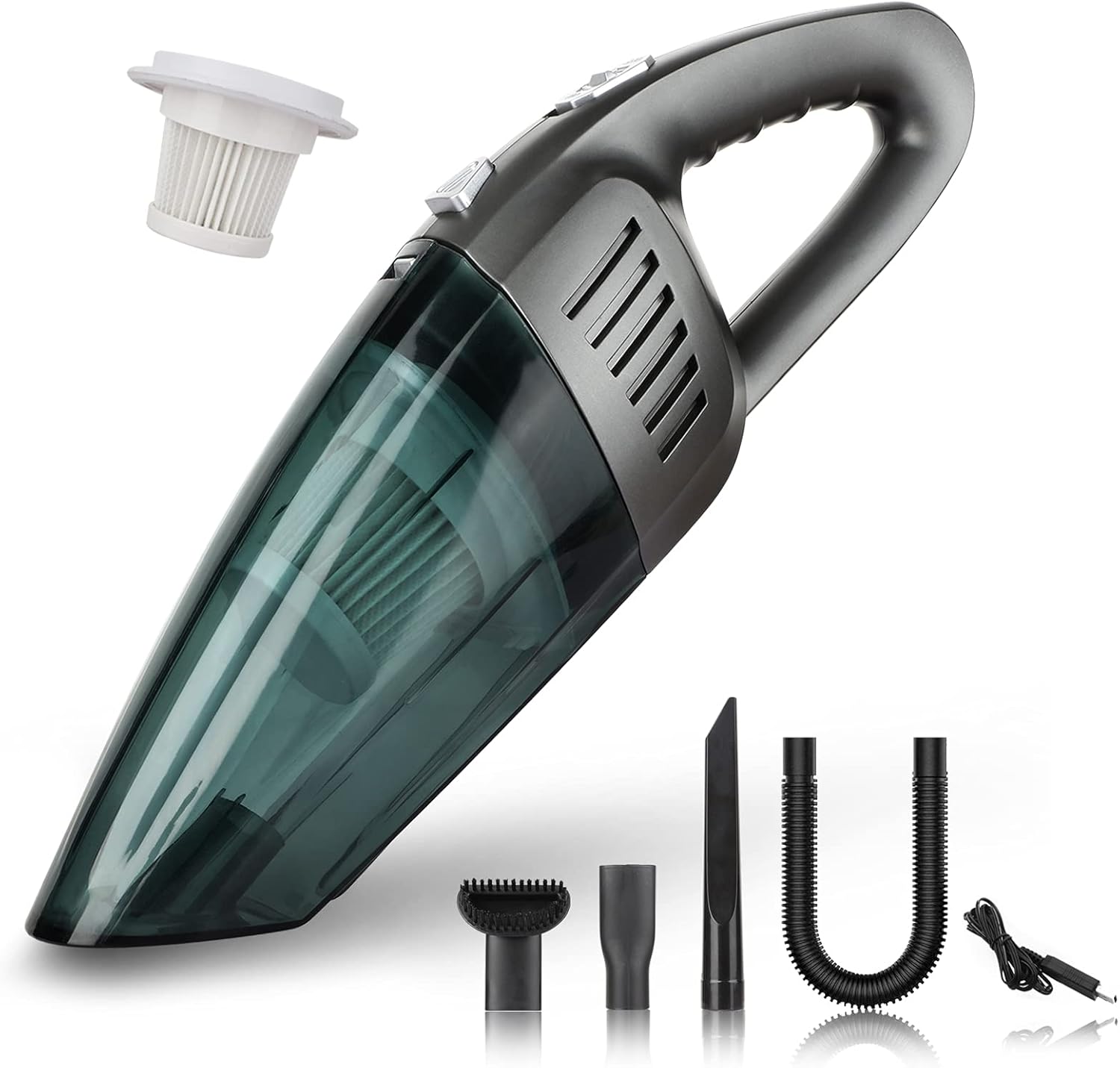
- Attachments & Accessories: The right tools make all the difference. Essential attachments include a crevice tool (for tight spaces), a brush tool (for upholstery and air vents), and an extension hose (for reaching under seats).
- Filtration System: If you or your passengers suffer from allergies, a HEPA filter is non-negotiable. It traps tiny particles like pollen, dust mites, and pet dander, ensuring the air exhausted from the vacuum is clean.
- Bin Capacity & Ergonomics: A larger dustbin means less frequent emptying. Also, consider the weight and feel of the vacuum in your hand. It should be lightweight and comfortable to hold for an extended period.
John Carter, a professional car detailer with over 15 years of experience, advises, “Don’t just look at the raw suction power. The right set of attachments is what truly separates a good car vacuum from a great one. A flexible crevice tool is worth its weight in gold for cleaning those impossible-to-reach areas.”
Our Picks: A Glimpse into the Top Car Vacuums
While the final list for the top 10 car vacuum cleaners 2025 is always evolving with new technology, we’ve structured our evaluation around the key metrics that matter most. Here’s a sample comparison to show you what to look for:
| Hypothetical Model | Type | Suction Power | Battery Life | Best For |
|---|---|---|---|---|
| Brand A “GigaSuck” | Cordless | 16,000 Pa | 25 mins | Pet owners needing max power |
| Brand B “AutoClean” | Corded | 120 AW | Unlimited | Deep cleaning, family vans |
| Brand C “HydroVac” | Cordless Wet/Dry | 10,000 Pa | 30 mins | All-weather, spill-prone cars |
| Brand D “CompactGo” | Cordless | 8,000 Pa | 20 mins | Quick daily touch-ups |
|
Our Picks for the Best Car Vacuum Cleaner in 2026
As an Amazon Associate, we earn from qualifying purchases.
|
||
| Num | Product | Action |
|---|---|---|
| 1 | BISSELL Little Green Mini Portable Carpet and Upholstery Deep Cleaner, Car/Auto Detailer, with HydroRinse Self-Cleaning Tool and 4\" Tough Stain Tool, Tea Green, 4075 |

|
| 2 | Minthouz Handheld Vacuum Cordless, Strong Suction Car Vacuum Cleaner with LED Light, Long Runtime Hand Vacuum Cordless Rechargeable, Hand Held Vac with Charging Base for Home/Car/Pet/Office |
|
| 3 | BLACK+DECKER dustbuster Handheld Vacuum, Cordless Car Vacuum Portable 12V, with Rotating and Extendable Nozzle (HHVI320JR02) |
|
| 4 | BISSELL Little Green Mini Portable Carpet and Upholstery Deep Cleaner, Car/Auto Detailer, with HydroRinse Self-Cleaning Tool and 4\" Tough Stain Tool, Tea Green, 4075 |
|
| 5 | KMM Handheld Car Vacuum Cleaner, 9000Pa Vacuum Cleaner and Air Duster, 120W High Power Hand Held Vacuum with LED Light and Multi-Nozzles for Car, Home, Office, Pet |
|
| 6 | Gtech Multi MK2 K9 Cordless Handheld Vacuum Cleaner - Portable Vacuum Cleaner for Car, Home, and More - Reinforced with Lightweight Aluminum - Rechargeable - Pet Vacuum |
|
| 7 | Car Vacuum Portable Cordless, 18000Pa 2 in 1 Vacuum Cleaner&Air Duster, 130W Brushless Motor Handheld Vacuum Cordless with 7800mAh Battery, LED Light, Multi-Nozzles for Car, Home, Office, Pet |
|
| 8 | BLACK+DECKER dustbuster AdvancedClean Cordless Handheld Vacuum, Compact Home and Car Vacuum with Crevice Tool (CHV1410L) |
|
| 9 | BLACK+DECKER dustbuster QuickClean Cordless Handheld Vacuum, Car Vacuum Portable (HNVC215B10) |
|
| 10 | Fanttik Slim V8 APEX Car Vacuum, 4-in-1 Portable Mini Cordless Vacuum with 19000pa Suction Power, Type-C Charge, 2 Suction Modes, Handheld Vacuum for Small Jobs, Car, Office Desk, Keyboards (Black) |
|
How to Use Your Car Vacuum Like a Pro Detailer
Owning a great car vacuum is only half the battle. Using it effectively is what delivers those showroom-clean results.
- Start with the Big Stuff: Before you even turn the vacuum on, remove all floor mats, trash, and loose items from your car. Give the floor mats a good shake outside.
- Work from Top to Bottom: Just like cleaning a house, start high and work your way down. Begin with the dashboard, door panels, and seats. This allows any dislodged dust and debris to fall to the floor, where you’ll clean it up last.
- Choose the Right Tool for the Job: Use the brush attachment for upholstery and delicate surfaces like the dashboard and air vents. Switch to the crevice tool for the seams of the seats, around the center console, and in door pockets.
- The Seat Slide Technique: Slide the front seats all the way forward to vacuum thoroughly underneath them. Then, slide them all the way back to get the area in front. Don’t forget to recline them to clean the area where the seatback and bottom cushion meet—a notorious crumb graveyard.
- Final Pass on the Floor: Finish by vacuuming the carpets and the floor mats you removed earlier before putting them back in.
Tips for Tackling Those Tricky Spots
- Air Vents: Use a soft brush attachment to gently suck out dust without pushing it further into the system.
- Under the Pedals: An extension hose or a long crevice tool is your best friend here.
- Between the Seats: This is where that long, skinny crevice tool truly shines.
Keeping Your Car Vacuum in Tip-Top Shape
To ensure your investment lasts, a little maintenance goes a long way. Regularly empty the dustbin, preferably after each use, to maintain optimal suction. Most importantly, clean your filter! A clogged filter is the number one cause of poor performance. Most filters are washable; just be sure they are completely dry before putting them back in the vacuum.
Frequently Asked Questions
Q: Can I really not just use a regular home vacuum for my car?
A: You can, but it’s not ideal. They are bulky, hard to maneuver in tight spaces, and their attachments are often too large for car interiors. A dedicated, portable car vacuum is far more efficient and will give you a better result in less time.
Q: Is a HEPA filter actually necessary for a car vacuum?
A: If you or your family members have allergies or asthma, a HEPA filter is highly recommended. It traps over 99.9% of tiny allergens, improving the air quality inside your car. For everyone else, it’s a great feature to have but not strictly essential.
Q: What’s a good suction power to look for in a cordless car vacuum?
A: For a cordless model, aim for at least 8,000 Pa for effective cleaning. High-performance models can offer 15,000 Pa or more, which is excellent for dealing with stubborn debris and pet hair.
Q: How long should the battery last on a cordless car vacuum?
A: A good benchmark is a runtime of 20 to 30 minutes on a full charge. This is typically enough time to give a standard sedan or SUV a thorough cleaning without feeling rushed.
Q: Are wet/dry car vacuums harder to clean?
A: They require a little more care than dry-only models. After sucking up a liquid, you’ll need to empty and rinse the collection tank and filter to prevent mold and odors. However, the process is usually straightforward.
The Final Word
Choosing from the top 10 Car Vacuum Cleaners 2025 doesn’t have to be overwhelming. By focusing on your specific needs—whether it’s the convenience of a cordless model, the raw power of a corded one, or the versatility of a wet/dry unit—you can find the perfect tool to keep your car looking and feeling its best. Investing in a quality car vacuum is an investment in a cleaner, healthier, and more enjoyable driving experience.
What are your biggest car cleaning challenges? Share your experiences or ask any questions in the comments below! We’d love to help.
