Let’s be honest, life happens inside our cars. Between the morning coffee run, kids dropping cookie crumbs in the back, and our furry friends leaving a trail of hair, our vehicle’s interior can start to look like a disaster zone. Are you tired of that constant layer of dust on the dashboard and those annoying bits of debris wedged between the seats? This comprehensive Mini Car Vacuum Cleaner Review is your roadmap to reclaiming a spotless interior. I used to battle pet hair on my car seats with flimsy lint rollers and awkward trips to the gas station vacuum until I discovered how a compact, powerful machine could completely change the game.
For those who take pride in their ride, a good portable vacuum is an essential tool, not a luxury. It’s the difference between a car that looks clean and one that feels clean. To explore how premium brands tackle this, our in-depth Dyson car vacuum cleaner review offers a detailed look at high-performance options. In this guide, we’ll break down everything you need to know to choose the perfect cleaning companion for your car, ensuring you invest your money wisely.
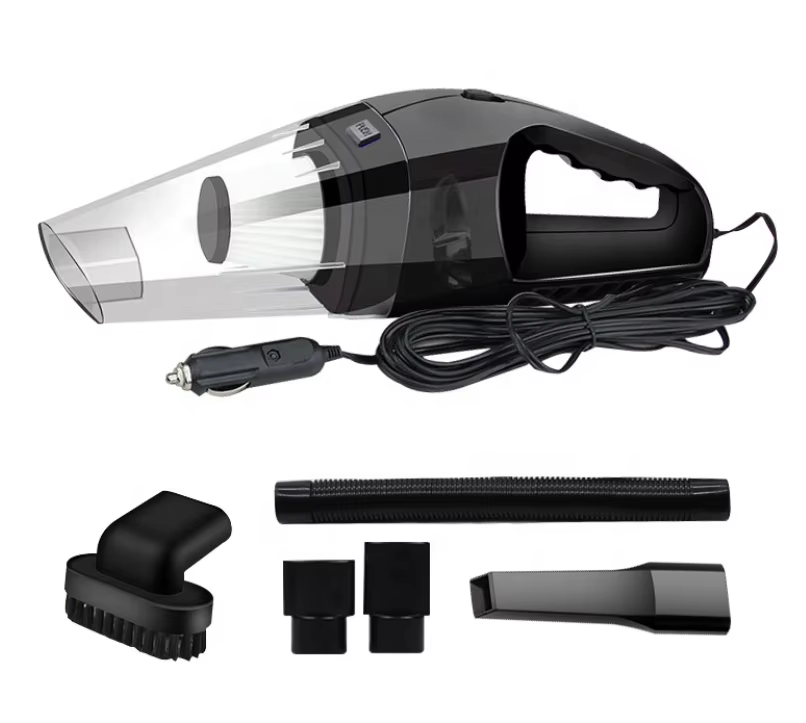
Why You Absolutely Need a Dedicated Car Vacuum
“Can’t I just use my regular home vacuum?” It’s a fair question, but one that overlooks the unique challenges of car detailing. Your home vacuum is a beast, but it’s often a clumsy one. It’s bulky, requires a nearby power outlet, and its attachments are designed for wide-open living rooms, not the tight confines of a footwell.
A dedicated car vacuum cleaner is engineered specifically for this environment. They are lightweight, portable, and come with specialized tools designed to navigate the nooks and crannies of your vehicle. It’s about having the right tool for the job. You wouldn’t use a sledgehammer to hang a picture frame, right? The same logic applies here.
What Are The Different Types of Car Vacuums?
When you start shopping, you’ll notice a few main categories. Understanding the differences is the first step to finding your perfect match.
Cordless Car Vacuums
These are the champions of convenience. Powered by rechargeable batteries (usually lithium-ion), they offer total freedom of movement. You can easily clean your car in the driveway, the garage, or a parking lot without worrying about finding an outlet. The trade-off? Battery life. You’ll need to make sure the runtime is long enough to clean your entire car on a single charge.
Corded Car Vacuums
Corded models typically plug into your car’s 12V cigarette lighter socket. Their biggest advantage is unlimited runtime. You can take as long as you need for a deep clean without the fear of the battery dying. However, the cord can sometimes be cumbersome, getting tangled around seats or not quite reaching the trunk.
Wet & Dry Car Vacuums
These versatile machines are the problem-solvers of the car vacuum world. Not only do they handle dust, dirt, and crumbs, but they can also tackle liquid spills. Whether it’s a spilled soda or muddy, melted snow, a wet/dry vacuum can handle it, making them incredibly useful for families or those living in wet climates.
Key Features to Look For: A Deep Dive Mini Car Vacuum Cleaner Review
Not all mini vacuums are created equal. To avoid buyer’s remorse, pay close attention to these critical features.
Suction Power: The Heart of the Machine
Suction power is the single most important factor. Unfortunately, manufacturers use different metrics, which can be confusing.
- Pascals (Pa): This measures the raw suction pressure. For a car vacuum, look for something in the range of 5,000 Pa for light tasks, and 10,000 Pa or more for serious deep cleaning.
- Air Watts (AW): This is often a more reliable measurement as it combines airflow with pressure. Higher Air Watts generally mean more effective cleaning power.
John Carter, a professional car detailer with 15 years of experience, advises, “Don’t just look at the suction power on the box. The right attachment is what makes the difference between a clean car and a detailed car. Strong suction is useless if you can’t direct it where it’s needed.”
Battery Life and Charging (for Cordless Models)
For a cordless model, aim for a runtime of at least 20-30 minutes on a standard setting. This should be enough for a thorough clean of a standard-sized sedan. Also, check the charging time. Some models take hours to recharge, while others offer fast-charging capabilities. USB-C charging is a modern convenience to look for, as you can charge it with the same cable as your phone.
Attachments and Accessories
The right tools turn a good vacuum into a great one. Essential attachments include:
- Crevice Tool: Long and thin, perfect for getting between seats, in the side door pockets, and along the center console.
- Brush Tool: Ideal for dusting dashboards, air vents, and agitating dirt from upholstery and carpets.
- Extension Hose: Provides extra reach to get under seats or into the far corners of the trunk.
Filtration System: Breathing Easy
A good filter traps dust and allergens, preventing them from being blown back into your car’s air. A HEPA (High-Efficiency Particulate Air) filter is the gold standard, capturing over 99.9% of tiny particles. This is especially important for allergy sufferers. Also, consider if the filters are washable and reusable, which can save you money over time. The approach to filter maintenance can vary, a concept we explore in our Gtech car vacuum cleaner review, which highlights a different system design.
Dustbin Capacity
A larger dustbin means you can clean for longer without stopping to empty it. However, a larger bin can make the vacuum bulkier. It’s a trade-off between capacity and portability. For a mini car vacuum, a capacity of around 0.4 to 0.7 liters is a good sweet spot.
|
Our Picks for the Best Car Vacuum Cleaner in 2026
As an Amazon Associate, we earn from qualifying purchases.
|
||
| Num | Product | Action |
|---|---|---|
| 1 | BLACK+DECKER dustbuster AdvancedClean Cordless Handheld Vacuum, Compact Home and Car Vacuum with Crevice Tool (CHV1410L) |

|
| 2 | BLACK+DECKER dustbuster Handheld Vacuum, Cordless Car Vacuum Portable 12V, with Rotating and Extendable Nozzle (HHVI320JR02) |
|
| 3 | BLACK+DECKER dustbuster QuickClean Cordless Handheld Vacuum, Car Vacuum Portable (HNVC215B10) |
|
| 4 | Minthouz Handheld Vacuum Cordless, Strong Suction Car Vacuum Cleaner with LED Light, Long Runtime Hand Vacuum Cordless Rechargeable, Hand Held Vac with Charging Base for Home/Car/Pet/Office |
|
| 5 | Fanttik Slim V8 APEX Car Vacuum, 4-in-1 Portable Mini Cordless Vacuum with 19000pa Suction Power, Type-C Charge, 2 Suction Modes, Handheld Vacuum for Small Jobs, Car, Office Desk, Keyboards (Black) |
|
| 6 | BISSELL Little Green Mini Portable Carpet and Upholstery Deep Cleaner, Car/Auto Detailer, with HydroRinse Self-Cleaning Tool and 4\" Tough Stain Tool, Tea Green, 4075 |
|
| 7 | Car Vacuum Portable Cordless, 18000Pa 2 in 1 Vacuum Cleaner&Air Duster, 130W Brushless Motor Handheld Vacuum Cordless with 7800mAh Battery, LED Light, Multi-Nozzles for Car, Home, Office, Pet |
|
| 8 | Gtech Multi MK2 K9 Cordless Handheld Vacuum Cleaner - Portable Vacuum Cleaner for Car, Home, and More - Reinforced with Lightweight Aluminum - Rechargeable - Pet Vacuum |
|
| 9 | BISSELL Little Green Mini Portable Carpet and Upholstery Deep Cleaner, Car/Auto Detailer, with HydroRinse Self-Cleaning Tool and 4\" Tough Stain Tool, Tea Green, 4075 |
|
| 10 | KMM Handheld Car Vacuum Cleaner, 9000Pa Vacuum Cleaner and Air Duster, 120W High Power Hand Held Vacuum with LED Light and Multi-Nozzles for Car, Home, Office, Pet |
|
How to Use Your Mini Car Vacuum Like a Pro
Owning a great tool is only half the battle. Using it effectively will give you that professional-level clean.
- Prep the Area: Before you start vacuuming, remove all floor mats, trash, and loose items from the car. Shake the floor mats out vigorously outside the vehicle.
- Start from the Top: Begin by vacuuming the dashboard, console, and door panels. This allows any dislodged dust to fall to the floor, where you’ll vacuum it up last.
- Work in Sections: Tackle one part of the car at a time—driver’s side, passenger side, then the back seats. This systematic approach ensures you don’t miss any spots.
- Move the Seats: Slide the front seats all the way forward to vacuum underneath them, then slide them all the way back to get the front area and seat rails.
- Use the Right Tool for the Job: Switch to your crevice tool for tight spaces and the brush tool for upholstery and vents. Don’t be afraid to change attachments frequently.
- Final Pass on the Floors: Finish by giving the carpets and floor mats a thorough vacuuming, going in multiple directions to lift the carpet pile and extract deep-down dirt.
Pro Tips for Tackling Those Awkward Spots
- Seat Rails: Use your crevice tool to get into the grimy tracks where your seats slide.
- Air Vents: A soft brush attachment is perfect for pulling dust out of air vents without scratching the plastic.
- Between the Console and Seat: This is the infamous “black hole” where phones and french fries disappear. Your crevice tool is your best friend here.
- Pedals: Use a stiff brush attachment to loosen caked-on mud and dirt from the pedals before vacuuming it up.
Keeping Your Vacuum in Tip-Top Shape: Maintenance Guide
A little bit of maintenance goes a long way in preserving your vacuum’s suction power and lifespan.
Empty the Dustbin Regularly
Don’t wait until it’s completely full. An overfull dustbin can significantly reduce suction power. Empty it after every one or two uses.
Clean the Filter
A clogged filter is the number one enemy of good suction. Check your user manual for instructions. Most filters can be tapped clean, while others are washable. If it’s washable, make sure it is 100% dry before putting it back in the vacuum to prevent mold and mildew.
Check for Clogs
Periodically check the nozzle and any attachments for blockages. A simple clog can make you think your vacuum has lost its power when it’s an easy fix.
Frequently Asked Questions (FAQ)
Can I use a regular home vacuum for my car?
You can, but it’s not ideal. They are bulky, hard to maneuver in tight spaces, and may not have the specialized attachments needed for effective car detailing. A mini car vacuum is designed for portability and precision.
What is a good suction power for a mini car vacuum cleaner?
Look for a minimum of 5,000 Pa for everyday cleaning. For deeper cleaning, especially if you have pets or kids, aim for 10,000 Pa or higher. If measured in Air Watts, anything over 15-20 AW is considered solid for a handheld device.
Should I get a corded or cordless car vacuum?
It depends on your needs. If you value ultimate convenience and can work within a 20-30 minute timeframe, go cordless. If you want unlimited power for long, deep-cleaning sessions and don’t mind managing a cable, a corded model is a great choice.
How important is a HEPA filter in a car vacuum?
A HEPA filter is very important if you or your passengers suffer from allergies or asthma. It traps fine dust, pollen, and pet dander, improving the air quality inside your car. For everyone else, it’s a nice-to-have feature that ensures a more thorough clean.
How often should I vacuum my car?
For a quick touch-up, once a week is a good habit to get into. A more thorough, deep clean should be done at least once a month to prevent dirt from getting ground into the upholstery and carpets.
Conclusion
Investing in a quality machine after doing your own mini Car Vacuum Cleaner review is a small step that makes a huge difference in your daily driving experience. It’s about more than just cleanliness; it’s about maintaining the value of your vehicle and creating a more pleasant and healthy environment for you and your passengers. By focusing on the key features—suction power, battery life, attachments, and filtration—you can find a powerful, portable vacuum that will make car cleaning a quick and satisfying task instead of a dreaded chore.
What are your biggest car cleaning challenges? Share your experiences or ask any questions in the comments below! We’d love to help.
