Let’s be honest, that sinking feeling when a full cup of coffee topples over onto your passenger seat is a universal experience for car owners. Your first instinct is panic, followed by the frantic search for napkins. But what if you could tackle that mess like a pro? Knowing exactly How To Use Car Vacuum Cleaner On Wet Mess not only saves your car’s interior from stains and mildew but also turns a potential disaster into a minor inconvenience. This guide will walk you through everything you need to know, from the crucial first steps to long-term maintenance.
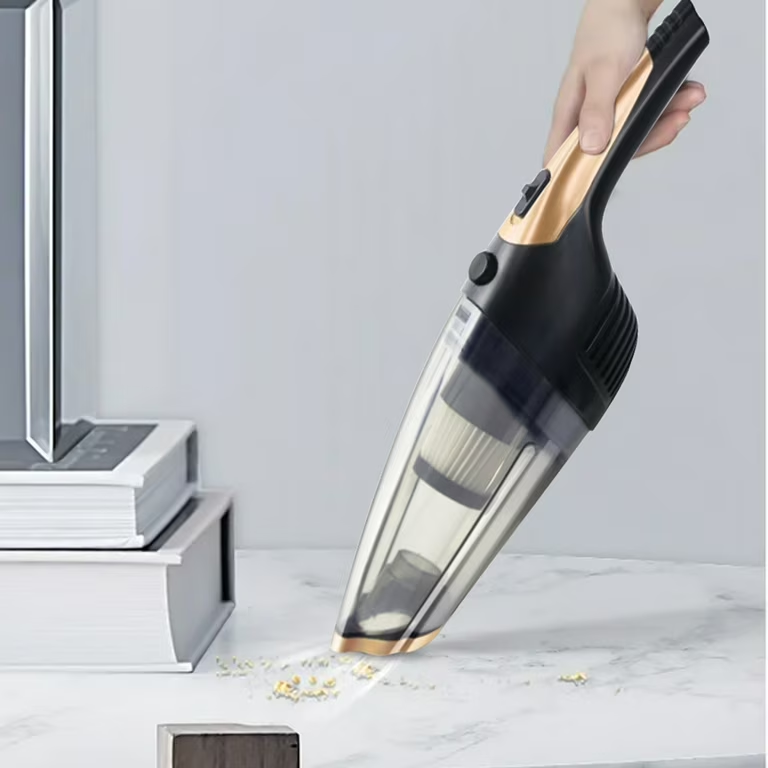
Why a Specialized Wet/Dry Car Vacuum is a Game-Changer
You might be tempted to grab any old portable vacuum and go to town on that spill. Stop right there. Using a standard, dry-only vacuum cleaner on any liquid is a recipe for disaster. It can lead to electric shock, permanently damage the motor, and create an even bigger mess.
A dedicated wet/dry car vacuum, however, is designed specifically for this dual purpose. These machines have protected motors and separate compartments to safely collect liquids without risking damage or danger. Investing in one is less of a luxury and more of an essential tool for any car owner who wants to maintain their vehicle’s value and cleanliness.
Can You Use ANY Car Vacuum on a Wet Mess?
This is a critical question, and the answer is a definitive no. You absolutely cannot use a standard dry-only vacuum on a liquid spill. A true wet/dry vacuum has specific design features that make it safe for liquids, such as a bypass motor that keeps water away from the electrical components and a collection tank designed to hold fluids. Always check your vacuum’s specifications. If it doesn’t explicitly state “Wet/Dry,” assume it is for dry debris only.
Your Step-by-Step Guide on How to Use Car Vacuum Cleaner on Wet Mess
Faced with a fresh spill? Don’t panic. Follow these steps for a clean, damage-free result.
- Act Fast, But Blot First
Before you even turn the vacuum on, grab a microfiber towel or paper towels and gently blot the affected area. The key here is to blot, not rub. Rubbing can force the liquid deeper into the upholstery fibers, making it harder to remove and potentially setting the stain. Your goal is to absorb as much of the excess liquid as possible. - Prepare Your Vacuum for Wet Duty
This is the most important step. If your wet/dry vacuum uses different filters for dry and wet operation, you must remove the paper or cloth dry filter. Sucking up water with a dry filter will ruin it instantly and can clog the machine. Many models have a foam sleeve or a specific wet-use filter that you’ll need to install instead. Consult your user manual if you’re unsure. Attach a nozzle suitable for liquids, like a squeegee or a wide utility nozzle. - Perform the Initial Suction
Turn on your vacuum and begin to work on the spill. Use slow, steady, and overlapping strokes. Let the suction do the work. You should hear the sound of the water being pulled into the machine. Continue this process until you can’t hear any more liquid being drawn up and the surface of the fabric feels damp rather than saturated. - Treat Any Remaining Stains
For spills like coffee, soda, or juice, some residue will likely remain after the liquid is gone. Apply a small amount of an appropriate car upholstery cleaner. Follow the product’s instructions, which usually involve lightly agitating the area with a soft brush. - The Final Vacuum and Drying
After treating the stain, perform another pass with your wet/dry vacuum to suck up the cleaning solution and any remaining moisture. Once you’ve removed as much liquid as possible, the final step is to ensure the area dries completely to prevent mold and mildew. Open the car doors or windows to let air circulate. If it’s a humid day, you can aim a fan at the spot or use the car’s heater to speed up the process.
|
Our Picks for the Best Car Vacuum Cleaner in 2026
As an Amazon Associate, we earn from qualifying purchases.
|
||
| Num | Product | Action |
|---|---|---|
| 1 | BISSELL Little Green Mini Portable Carpet and Upholstery Deep Cleaner, Car/Auto Detailer, with HydroRinse Self-Cleaning Tool and 4\" Tough Stain Tool, Tea Green, 4075 |

|
| 2 | Gtech Multi MK2 K9 Cordless Handheld Vacuum Cleaner - Portable Vacuum Cleaner for Car, Home, and More - Reinforced with Lightweight Aluminum - Rechargeable - Pet Vacuum |
|
| 3 | Fanttik Slim V8 APEX Car Vacuum, 4-in-1 Portable Mini Cordless Vacuum with 19000pa Suction Power, Type-C Charge, 2 Suction Modes, Handheld Vacuum for Small Jobs, Car, Office Desk, Keyboards (Black) |
|
| 4 | BLACK+DECKER dustbuster QuickClean Cordless Handheld Vacuum, Car Vacuum Portable (HNVC215B10) |
|
| 5 | Car Vacuum Portable Cordless, 18000Pa 2 in 1 Vacuum Cleaner&Air Duster, 130W Brushless Motor Handheld Vacuum Cordless with 7800mAh Battery, LED Light, Multi-Nozzles for Car, Home, Office, Pet |
|
| 6 | Minthouz Handheld Vacuum Cordless, Strong Suction Car Vacuum Cleaner with LED Light, Long Runtime Hand Vacuum Cordless Rechargeable, Hand Held Vac with Charging Base for Home/Car/Pet/Office |
|
| 7 | BISSELL Little Green Mini Portable Carpet and Upholstery Deep Cleaner, Car/Auto Detailer, with HydroRinse Self-Cleaning Tool and 4\" Tough Stain Tool, Tea Green, 4075 |
|
| 8 | BLACK+DECKER dustbuster Handheld Vacuum, Cordless Car Vacuum Portable 12V, with Rotating and Extendable Nozzle (HHVI320JR02) |
|
| 9 | BLACK+DECKER dustbuster AdvancedClean Cordless Handheld Vacuum, Compact Home and Car Vacuum with Crevice Tool (CHV1410L) |
|
| 10 | KMM Handheld Car Vacuum Cleaner, 9000Pa Vacuum Cleaner and Air Duster, 120W High Power Hand Held Vacuum with LED Light and Multi-Nozzles for Car, Home, Office, Pet |
|
Pro Tips for Tackling Tough Liquid Spills
Mastering the basics is great, but these professional car detailing tips will take your cleaning game to the next level.
- The Power of the Nozzle: Don’t underestimate the included attachments. A squeegee nozzle is fantastic for pulling water out of floor mats and flat upholstery. A crevice tool can help you get into the tight seams of your seats where liquid loves to hide.
- Work from the Outside In: When tackling a spill on fabric, always work from the outer edge of the stain toward the center. This prevents the stain from spreading and becoming larger.
- Cold Water is Your Friend: For many common spills (like blood or mud), using cold water is crucial. Hot water can “cook” the proteins in these stains, setting them permanently into the fabric.
- Don’t Forget to Air it Out: This can’t be stressed enough. A damp, sealed car is a breeding ground for mildew and musty smells. Always allow for adequate drying time after dealing with a wet mess.
“Most people think more power is better, but for wet spills, technique is king. Use a squeegee nozzle and slow, deliberate strokes. You’re not just sucking up water; you’re pulling it out of the fabric fibers. It’s about control, not brute force.” – Marcus Thorne, Certified Master Detailer at “Prestige Auto Spa”.
After the Cleanup: Maintaining Your Wet/Dry Car Vacuum
You’ve successfully cleaned the mess, but your job isn’t quite done. Proper maintenance is key to ensuring your cordless car vacuum is ready for the next emergency and lasts for years.
- Empty the Tank Immediately: Never leave liquid sitting in your vacuum’s collection tank. This can lead to nasty odors and the growth of bacteria and mold.
- Rinse and Dry: After emptying the tank, rinse it thoroughly with clean water. If you used it on a sticky spill like soda, a little soap might be necessary. Allow the tank to air dry completely before reassembling the vacuum.
- Clean Your Hoses and Attachments: Give the hose and any used nozzles a quick rinse to clear out any residue.
- Reinstall the Dry Filter (If Applicable): Once everything is clean and dry, don’t forget to put your dry filter back in so it’s ready for regular use. Storing it without the dry filter is a common mistake that leaves you unprepared for everyday crumbs and dust.
Frequently Asked Questions (FAQ)
What happens if I accidentally use a regular dry vacuum on a wet spill?
Using a dry vacuum on liquid is extremely dangerous. You risk an electrical short, which can deliver a powerful shock and create a fire hazard. At best, you will likely destroy the vacuum’s motor and filter system, rendering it useless.
Can I use a wet/dry car vacuum on pet accidents?
Yes, a wet/dry vacuum is an excellent tool for cleaning up pet accidents. After removing any solid waste, you can use the vacuum to extract the liquid. It’s highly recommended to follow up with an enzymatic cleaner designed for pet stains to break down the odor-causing bacteria before doing a final vacuum.
How much suction power do I need for wet messes?
While high suction power (measured in Pascal’s or Pa) is great for dry debris, it’s less of a critical factor for liquids. The key is consistent, sealed suction. A good wet/dry car vacuum will be designed to lift water effectively from fabric, a task that relies more on airflow and nozzle design than raw power.
Is a corded or cordless car vacuum better for wet messes?
Both have their pros and cons. A cordless car vacuum offers incredible convenience and portability, allowing you to tackle a spill anywhere, anytime. A corded model will typically offer more sustained power and unlimited runtime, which can be useful for larger messes or a full interior detailing session.
How do I know for sure if my car vacuum is wet/dry compatible?
The easiest way is to check the product’s packaging, user manual, or the manufacturer’s website. It will be clearly advertised as a “Wet/Dry” or “2-in-1” vacuum. Look for features like a separate collection tank for liquids and instructions on switching between wet and dry modes. If it’s not explicitly stated, do not risk it.
In conclusion, knowing how to use Car Vacuum Cleaner on wet mess is a skill that transforms a stressful situation into a manageable task. By investing in the right tool—a dedicated wet/dry model—and following the correct procedures, you can protect your car’s interior from long-term damage and keep it looking and smelling fresh. It’s a small investment in equipment and knowledge that pays huge dividends in peace of mind.
Have you ever faced a catastrophic spill in your car? Share your stories or ask any more questions in the comments below! We’d love to hear from you.
